

Default and channel overrides
The plan default is 24 months (720 days) unless the governing plan defines a different period. Leaving a channel without a custom value keeps that plan default; the workspace is not silently populated with an override.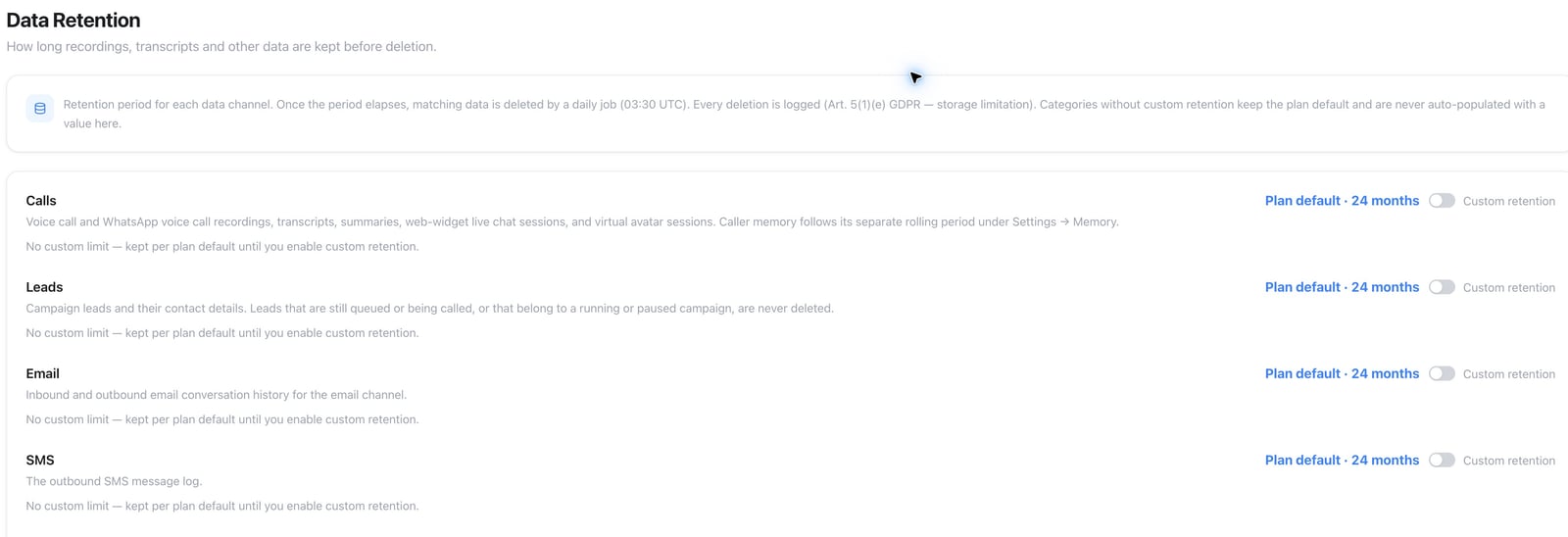
Data Retention — choose retention periods
- calls, including voice, AI avatar, live chat and WhatsApp voice history;
- call recordings, transcripts, summaries and caller-memory data;
- campaign leads;
- email threads and the outbound SMS log;
- Telegram, Slack, Messenger, Microsoft Teams, Discord, Google Chat, X and WhatsApp conversations, messages and stored media.
Which plan applies?
A workspace on the main platform follows its platform plan. A customer workspace created through a white-label reseller follows the plan in that reseller’s catalog. The same rule applies to free-account defaults and retention limits.Deletion and audit trail
Expired data is removed automatically. Deletions are recorded in an audit trail to support your retention and compliance reviews — see Trust Center for the platform’s broader data-protection commitments. If configurable retention is not included in the plan, workspace-specific cleanup settings do not apply. History, the public API (GET /api/v1/calls, GET /api/v1/calls/{id}, GET /api/v1/calls/{id}/recording), and MCP (list_calls, get_call) can read a call and its recording. They do not delete a single call on demand. To keep call data for a shorter time, shorten the calls retention period.
Legal basis
This section is general information, not legal advice. Confirm applicable retention rules with legal counsel for your industry and jurisdiction.
API and MCP
GET /api/v1/settings/retentionreads the current default, channel settings, and allowed range.PATCH /api/v1/settings/retentionupdates one or more channel values. Sendnullto clear an override and restore the plan default.- MCP tools:
get_retention_settingsandupdate_retention_settings.
settings:read / settings:write; MCP also accepts the matching
assistant read/write scopes.